Appendix 2: Physical requirements
Physical packaging, labeling and documents accompanying the delivery must correspond to the agreed master data, product catalogues and information contained in electronic message exchanges.
General
This appendix includes various requirements and information concerning how physical deliveries shall take place between the suppliers and the health regions.
There may be standards that apply to individual products in goods categories, as specified in the request for tender.
Generally, physical packages and accompanying documents must correspond to the agreed master data, product catalogues and information contained in electronic message exchanges.
Generally, the supplier’s item numbers shall be consistent across all electronic and physical documentation in the contract, catalogue, purchase order, order confirmation, packing slip and invoice.
For deliveries of medical devices, the supplier must comply with the European Medical Device Regulation (2017/745) and/or In Vitro Diagnostic Device Regulation (2017/746). Documentation shall be presented to the customer upon request.
Lead times
Each hospital trust may agree lead times with suppliers to ensure a good inflow of goods to its stock receipts.
For deliveries to regional supply centres, the supplier and the region’s operational contacts shall agree regular purchase and delivery dates.
In case of special purchases, or purchases of unusual volume or delay, the supplier must notify the customer to agree on an amended time schedule.
Physical conditions in hospital trusts and supply centres
Suppliers and sub-suppliers must always deliver in accordance with the specifications in the purchase order and terms of delivery. An overview of acceptance conditions, equipment and contact information for central stock receipts can be found here.
General requirements, pallet type
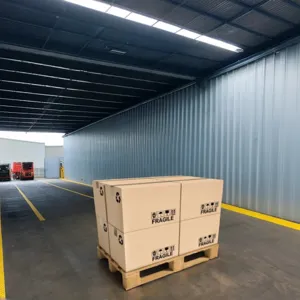
The supplier shall deliver goods on a standard EUR pallet (80 cm x 120 cm) in accordance with the standard NS-ENG 13698-1.
Packages on the pallet must be stacked in such a way that all identifications, incl. bar codes and item numbers for each package is clearly visible and facing out.
If the pallet is wrapped in plastic, a clear, recyclable wrap must be used.
All imports on wooden pallets must comply with the ISPM 15.
For pallets containing the same articles with lot and batch numbers, each individual pallet must be delivered with the same lot and batch numbers.
Pallet height for full pallets
Efforts must be made to keep pallet heights under 120 cm for full pallets with a single item type.
Where this is impractical due to the nature of the goods, taller pallets may be permitted as agreed with the health region’s contact person.
Pallet heights can be mapped as part of the market dialogue.
Pallets with pharmaceuticals
For pharmaceuticals delivered to supply centres, the requirement of clean lot and batch numbers per pallet supersedes the general requirements for full pallets, preferably a height of 180 cm and max. weight of ≤ 750 kg.
Mixed pallet
Deliveries of individual items that do not full a full pallet may be delivered as a mixed pallet.
The supplier must always keep the full quantity of a single item on the same pallet and not distribute items across multiple pallets in one delivery.
The pallet must clearly be marked as a mixed pallet for a more efficient acceptance procedure (sticker, note, etc.).
The height of a mixed pallet should not exceed 180–190 cm, in consideration of HSE requirements
Pallet exchange
The supplier shall make arrangements for the exchange of EUR pallets between recipient and carrier.
General
The supplier must label the deliveries in a robust and satisfactory manner, ensuring that the goods can withstand handling during transport and are not damaged before delivery.
The packaging must comply with the manufacturer’s specifications.
Nevertheless, the supplier is encouraged to optimise and reduce packaging material use, as well as facilitate for the implementation of reusable and recyclable solutions.
The goods will be inspected in accordance with a special template for quality control, as described in Appendix 4, item 2 on acceptance.
Quality and pests
The supplier must ensure that:
- pests, insects, silverfish, etc. do not enter hospital trusts or supply centres via goods or packaging.
- goods are protected from sunlight, water, and significant temperature variations that can create condensation and damage the product or the seals of the packaging.
Co-packaging
Goods with differing characteristics must normally not be co-packaged in the same packaging. The supplier is responsible for ensuring compliance with these requirements. Examples of goods with differing characteristics include dangerous goods, biological goods, temperature-controlled goods, sterile and non-sterile goods, dry goods and foodstuffs. The list is not exhaustive
Sterile goods
For sterile medical products, the seal of the manufacturer’s smallest packaging must not be broken until the product is to be used on the patient.
Sterile goods used in sterile procedures in the health regions must always be delivered in accordance with the following:
- must only be packaged with other sterile goods.
- must be packaged in such a manner that there is no risk of contamination at packaging level during transport and reloading from manufacturer to end user.
| 1-layer original primary packaging (so-called ME) |
The protective barrier for the sterile product (normally the inner packaging). |
|
2-layer original packaging (so-called CU) |
The protective packaging for the primary packaging is normally a consumer unit. |
|
3-layer original packaging (TU) |
The protective packaging outside the consumer unit is considered a transport or warehouse unit. This is intended to protect against impact, crushing, temperature fluctuations and moisture during transport and storage. |
If the product is not available in 3-layer original packaging, of if no such packaging option exists, the item may be delivered in a 2-layer original packaging with an additional protective layer of packaging, provided the manufacturer has approved this.
Sterile goods without transport unit packaging (SUL)
The hospital trust’s or the region’s contact must, in consultation with the supplier, determine whether goods in unoriginal 3-layer packaging material shall be stocked. These goods are categorised as sterile without transport unit packaging.
Such goods must comply with the requirements for sterile goods, shall be clearly marked as sterile goods without transport unit packaging, and must not be co-packaged with other goods. It must be clear that the outer packaging and not the original packaging has been dispatched from the supplier, so that the recipient will be able to identify the goods upon receipt.
General requirements concerning visibility
Goods under contract must be clearly marked, with visible item numbers and quantities at all packaging levels, see Figure 1 below.
All labels including item numbers, bar codes, QR codes, etc. in the delivery must be facing out in order to ease registration upon receipt.
The supplier must ensure that the original packaging is clearly visible in the shipment, and that other labels are placed in an area of good visibility, while not covering the original labelling.
ASN certification
If advanced shipping notes (ASN) are used, all packages must be marked with the ASN number and bar code.
LOT number
Goods requiring labelling with LOT numbers must have the code, number, symbol, etc. clearly visible, so that it is possible to trace the goods back to a specific lot or batch number.
Batch number
Goods with a batch number show which goods were produced at the same time as one batch.
Batch numbers are used to identify batches and in recalls, if relevant.
The information must include GS1-128 labels, Data Matrix or similar https://www.gs1.no/.
Best before date
For products with a shelf life, labels must comply with GS1-128, Data Matrix or similar. Labels must be legible and specify year, month and day clearly
CE certification
CE markings must be clearly visible on the product to ensure that the safety requirements have been met for the product in accordance with EEA/EU regulations and directives.
MDR/IVDR
The manufacturers markings must indicate whether the product is subject to laws or regulations concerning medical devices. If a product is subject to MDR/IVDR, the supplier must comply with labelling requirements to ensure traceability at all levels. Norwegian Medical Products Agency
Sterile goods
Sterile goods must be clearly marked as “STERILE” by the supplier at all packaging levels. The outer packaging must include information about the product’s item number, lot and batch numbers, expiration date, item name, etc.
Fragile goods
Packages containing goods that must be handled with care (fragile, this side up, etc.) must be clearly labelled. Examples include “GLASS”, “THIS SIDE UP”, “↑”.
Liquid goods
Liquid goods must be labelled with arrows “↑” or “This side up”.
Dangerous goods (ADR)
Dangerous goods classified as ADR goods must be labelled and transported in compliance with the regulatory framework. The supplier is responsible for presenting relevant documentation and forwarding product data sheets at the customer’s request. Directorate for Civil Protection
Environmental labelling
The supplier is responsible for making sure that all products, including packaging, is in compliance with environmental documentation and labelling requirements. Documentation shall be presented to the customer upon request.
Temperature-regulated goods
Goods categorised as refrigerated or frozen goods must be clearly labelled as such.
The supplier must log temperature readings, documenting temperatures throughout transport, from the sender to the recipient. This documentation shall be presented upon request.
Biological
The goods must be labelled to clearly identify the goods as containing biological material. Documentation shall be presented to the customer upon request.
Labelling pharmaceuticals
Pharmaceuticals covered by the European Falsified Medicines Directive (FMD) must have a clearly visible label, including, e.g. the letter “F”.
Packing slip content
The packing slip must include the following:
- the supplier’s or sender’s name, address, postal code, postal area and country.
- contact address in case of complaints to the supplier.
- the customer’s or purchaser’s name, street address, goods address, postal code, postal area, item number and purchase order number (PO number).
- Item numbers shall be identical to the contract’s item number and the item number from the electronic purchase order. The purchase order must specify item numbers, quantities, purchased quantities and back ordered goods, as well as the estimated new delivery date for any back ordered items.
- Lot numbers, batch numbers or expiration dates for the items, and these must be scannable upon receipt.
- Specification of any goods with special requirements (temperature-regulated goods, ADR goods, FMD, pharmaceuticals, etc.).
- Date of processing and signature from recipient upon receipt.
Physical packing slip
As a main rule, deliveries shall include a physical packing slip:
- collated in a separate envelope/plastic slip pocket, clearly visible on the outside of the pallet.
- collated with the transport unit and individual shipment.
- placed in such a manner that it does not cover the opening of the box or original product labelling or address label.
- attached in such a manner that the purchase order, packing slip and product bar codes can be accessed from the outside of the box on the pallet or delivery for greater ease upon receipt.
Transport label
The supplier must ensure that all transport labels per package and pallet are clearly marked with the recipient ward, as specified on the purchase order (PO) for greater ease of distribution to in-house distribution points within hospital trusts or supply centres.
Other documentation
If relevant for the delivery, updated versions of user manuals, instructions for operation and maintenance, safety data sheets, environmental documentation or other relevant documentation in Norwegian must be included with the shipment.
Other relevant documentation may be presented at the customer’s request.
Pharmaceutical documentation
For pharmaceuticals delivered straight from abroad, a physical certificate of compliance (COC) must be included with the packing slip for each shipment
General
Normally products shall have at least 12 months left until their expiration dates.
However, the customer shall accept a shorter remaining period until expiration for individual items if it is a high-turnover item or if there is a shortage.
For types of goods with special expiration requirements, these will be specified in the request for tender or in the procurement contract.
General
Select regional supply centres have control stations where physical inspections and quality control of packaging materials and sizes of goods are carried out.
All new goods stocked, including temporary replacement goods, must go through the control station for inspection in accordance with contract terms and conditions and Figure 1 Qualify control in Appendix 4.
Control station units
Each control station can establish agreements with individual suppliers.
The control station may make a separate purchase from a supply centre as a special “control station purchase”, marked with the relevant delivery address.
The supplier must enter packaging size information on the region's forms and present the physical packaging that will be purchased, see Figure 1 Packaging guide in this appendix. I.e. a transport unit (TU) comprising consumer units (CU), down to the smallest units.
Approved goods
The supplier may be contacted as needed for verification of packaging sizes and control of unit levels, packaging, sales units and labelling.
Goods approved in accordance with the packaging guide can be put in stock.
Unapproved goods
If the goods cannot be approved in accordance with the requirements of Appendix 2, the goods will be set aside for further processing until the non-conformity has been addressed with the supplier. The supplier may be asked, as needed, to explain non-conformities from the contract with the contract manager.
Goods that cannot be approved must be returned and credited by the supplier, and new goods must be delivered to the control station.
Packing guide

- T-PAK / DU is pallet level with a single article on a standard EUR pallet. That is unbroken article-clean whole pallet with identical products with the same Batch, Lot and shelf-life date.
- The packaging unit usually contains several L-PAK stacked together on a pallet.

- L-PAK / TU is transport carton level.
- Stock packaging must be original transport packaging.
- The packaging is usually a cardboard box containing several consumer packages, but can be other packaging that must withstand storage handling and transport.

- F-PAK / CU is adapted to the consumption needs at department level - often referred to as inner packaging, department packaging or consumer packaging.
- The packaging unit F-PAK contains one or more ME (smallest units).

- ME er laveste brukerenhet (minste nedbrytbare enhet) og også lagerføringsenhet i datasystemene.
- Enhetsnivået kan også være et flerpakket produkt i tilfeller hvor deling av pakning ikke er hensiktsmessig, eller hvor deling medfører at produktet mister tilsiktet kvalitet.